Book Appointment Now

Wrist Sprain Relief
Wrist Sprain Relief: Causes, Symptoms, and Evidence-Based Treatment
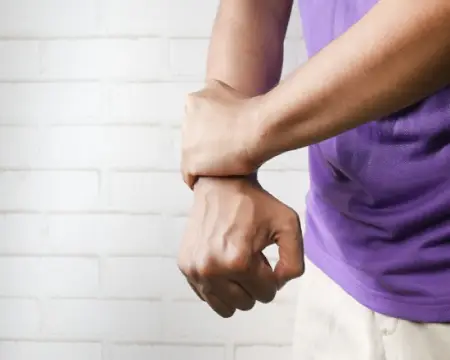
Wrist sprains are frequent upper-extremity injuries treated in rehabilitation clinics. A wrist sprain occurs when stabilizing ligaments stretch or tear beyond their normal limit. This injury leads to swelling, localized joint tenderness, and reduced grip strength. Consequently, simple tasks like typing, opening jars, or lifting objects become painful.
At Pro Fusion Rehab, our multidisciplinary clinical team in Pickering and Milton evaluates wrist joint mechanics. We combine registered physiotherapy, registered massage therapy (RMT), and acupuncture to help you regain functional strength.
At Pro Fusion Rehab, our multidisciplinary clinical team in Pickering and Milton evaluates wrist joint mechanics. We combine registered physiotherapy, registered massage therapy (RMT), and acupuncture to help you regain functional strength.
Typical Symptoms & Common Causes of a Wrist Sprain
Wrist sprain symptoms vary depending on the severity of ligament damage. Furthermore, symptoms can range from mild joint discomfort to severe functional impairment:
- Sudden Joint Pain: Sharp, immediate pain following an awkward fall, bend, or forceful impact.
- Rapid Localized Swelling: Visible fluid accumulation across the dorsal or palmar aspect of the wrist joint.
- Bruising and Discoloration: Redness or dark discoloration spreading across the wrist and into the hand.
- Reduced Range of Motion: Difficulty flexing, extending, or rotating the wrist without pain.
- Weakness in Grip Strength: Significant difficulty holding grocery bags, lifting cookware, or gripping tools.
Wrist sprains happen when an unexpected force drives the joint past its normal physiological range:
- Falls on an Outstretched Hand (FOOSH): Tripping or slipping on ice causes an instinctive reflex to land with open hands. This impact bends the wrist backward violently and tears supporting ligaments.
- High-Impact Sports Injuries: Collisions and falls during hockey, snowboarding, basketball, or gymnastics generate excessive force on carpal joints.
- Sudden Twisting or Rotational Forces: Power tools catching or awkward pulls during manual labour wrench the joint sideways.
- Repetitive Minor Microtrauma: Sustained high-impact tasks can progressively weaken ligaments, making them vulnerable to a sudden sprain.
- Inadequate Protective Equipment: Engaging in high-risk sports without supportive wrist guards leaves joints exposed to extreme forces.
Looking for Wrist Sprain Relief?
Immobilizing the joint completely for weeks can cause stiffness and muscle wasting. Instead, practicing structured care protects the healing ligaments:
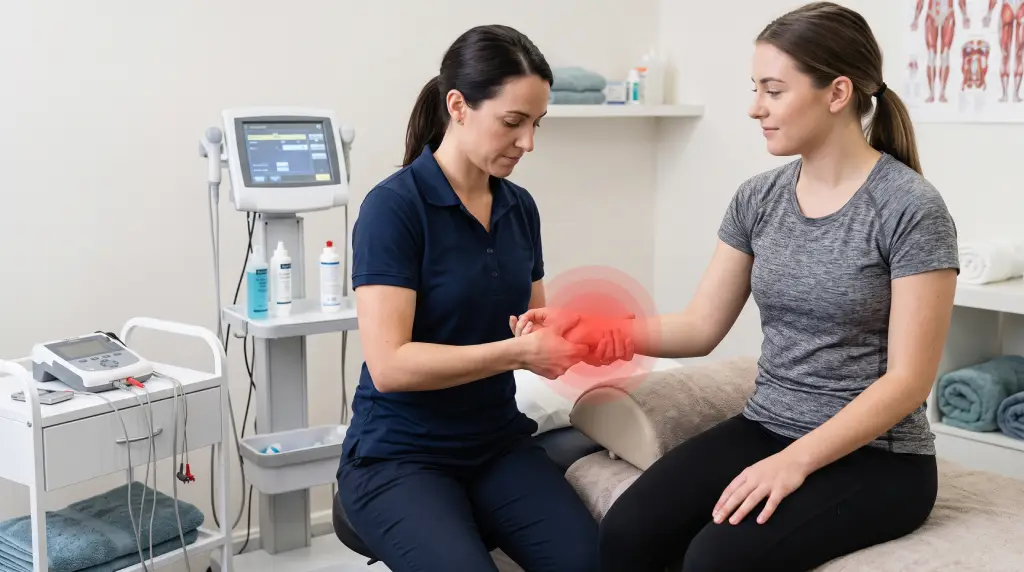
- Protect the Ligament Early: Avoid heavy lifting and pushing through sharp pain during the initial 48 hours. Consider using a wrist splint temporarily.
- Apply Light Compression: Wrap the wrist with an elastic support bandage to minimize swelling without cutting off finger circulation.
- Elevate the Arm: Rest your hand and wrist above heart level to assist lymphatic drainage and reduce swelling.
- Keep Fingers Moving: Gently wiggle and bend your fingers regularly to maintain circulation and prevent hand stiffness.
- Seek Early Clinical Assessment: Differentiating between a sprain and a scaphoid fracture is essential. Therefore, get an early evaluation.
How Can Physiotherapy Treat a Wrist Sprain?
A Registered Physiotherapist examines joint laxity, carpal bone alignment, and neural pathways. After that, your therapist creates a step-by-step rehabilitation plan.
Key treatment approaches include:
Key treatment approaches include:
- 1. Manual Therapy and Carpal Mobilization: Hands-on mobilizations restore normal glide between the radiocarpal and midcarpal joints. Consequently, post-injury stiffness and joint friction decline.
- 2. Progressive Tendon and Grip Strengthening: Therapeutic exercises build strength in the wrist flexors, extensors, and intrinsic hand muscles. As a result, muscles help compensate for lax ligaments.
- 3. Proprioceptive and Sensorimotor Training: Ligament injuries disrupt joint position sensors. Weight-bearing progressions on foam pads retrain your wrist to tolerate dynamic loads safely.
- 4. Custom Taping and Protective Splinting: Therapists apply specialized kinesiology or rigid taping to stabilize unstable joints. Later, functional braces protect the wrist during work tasks.
Wrist Sprain Relief at Pro Fusion Rehab (Pickering & Milton)
At Pro Fusion Rehab, our multidisciplinary team coordinates care to deliver efficient recovery:
- Registered Physiotherapy: We provide joint assessments, carpal mobilizations, grip rebuilding, and return-to-sport conditioning.
- Registered Massage Therapy (RMT): Our therapists relieve compensatory tension throughout the forearm, biceps, and shoulder girdle.
- Acupuncture: We use neuro-functional acupuncture to downregulate localized pain and improve regional microcirculation.
- Supportive Bracing Guidance: We evaluate your wrist to fit appropriate functional splints that protect the joint during recovery.
Frequently Asked Questions (FAQs)
How can I tell if my wrist is sprained or fractured?
Both injuries cause pain, swelling, and bruising. However, severe deep tenderness in the “anatomical snuffbox” (the hollow at the base of the thumb) often indicates a scaphoid fracture. A clinical evaluation and X-ray are necessary to rule out bone fractures.
How long does a wrist sprain take to heal?
Mild Grade 1 sprains typically heal within 2 to 4 weeks with conservative care. Conversely, severe Grade 2 or 3 ligament tears require 6 to 10 weeks of structured rehabilitation to regain stability.
Should I wear a wrist brace all day?
No, continuous brace use can cause tendon stiffness and muscle weakness. Wear the brace during aggravating tasks or while sleeping. Remove it for gentle mobility exercises.
When can I return to lifting weights or sports?
You can return once you have full pain-free range of motion, normal grip strength, and the ability to bear weight through your palm without discomfort. Your physiotherapist will guide your phased progression.

Home Exercises and Remedies for Wrist Sprain Relief
Gentle home exercises restore mobility and grip strength between clinic appointments. Always perform these movements within a comfortable, pain-free range:
- Wrist Flexion and Extension: Rest your forearm on a table with your hand hanging off the edge. Slowly bend your wrist up, hold for 3 seconds, then lower it down under control. Repeat 10 times to restore joint range.
- Wrist Pronation and Supination: Sit with your elbow bent at your side at 90 degrees. Turn your palm face up, hold for 3 seconds, then turn it face down. Complete 10 controlled repetitions to ease rotational stiffness.
- Finger Tendon Glides: Extend your fingers straight out. Slowly curl them into a hook fist, then a full fist, and return to an open hand. Repeat 10 times to prevent tendon adhesions.
- Soft Ball Squeezes: Hold a soft stress ball or rolled sock in your palm. Squeeze gently for 5 seconds, then relax. Complete 10 repetitions to rebuild basic grip stamina without overloading healing ligaments.
- Cold Therapy: Apply an ice pack wrapped in a thin towel for 10 to 15 minutes after activities to numb sharp joint pain.
Find The Physiotherapy Clinic Near You
Pro Fusion Rehab has 2 well designed and modern rehabilitation clinics, located at Pickering and Milton Ontario.
Pickering Physiotherapy Clinic
Milton Physiotherapy Clinic
Try Our Direct Billing Service
Lower Your Upfront Payment
We direct bill most of the Group Health Benefits, WSIB and Auto Insurance Company