Book Appointment Now

TMJ Disorder Relief
TMJ Disorder Relief: Causes, Symptoms, and Evidence-Based Treatment

Temporomandibular joint (TMJ) disorder involves irritation or dysfunction of the hinge joints connecting your jawbone to your skull. These joints, along with surrounding muscle groups, control chewing, speaking, and swallowing. Because the jaw moves thousands of times each day, joint inflammation or muscular strain can cause continuous facial fatigue. Consequently, simple daily activities like eating, yawning, or talking become uncomfortable.
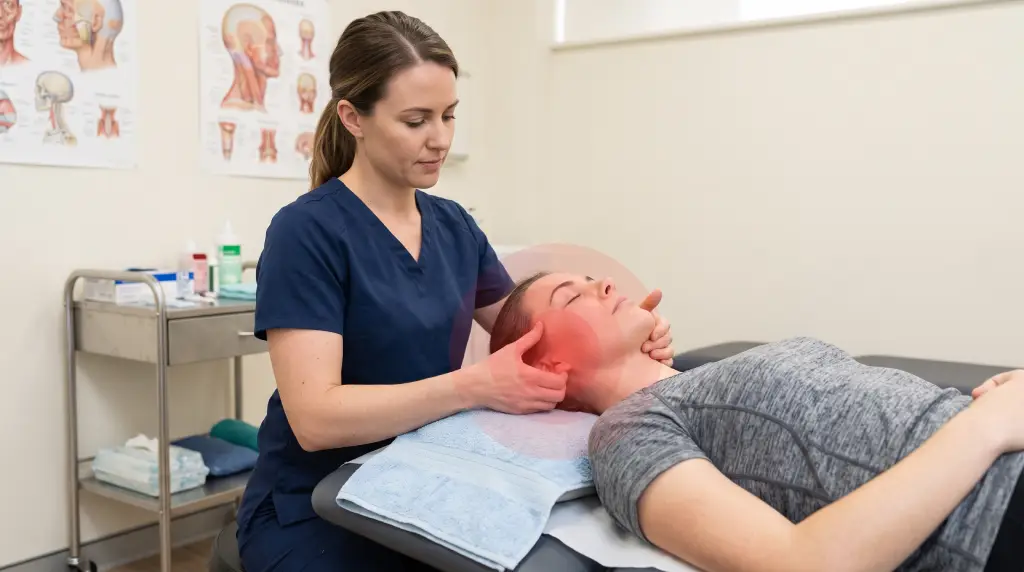
At Pro Fusion Rehab, our experienced team in Pickering and Milton evaluates the mechanical connections between the jaw, head, and neck. We integrate registered physiotherapy, registered massage therapy (RMT), and acupuncture to restore smooth jaw mobility and relieve tension.
At Pro Fusion Rehab, our experienced team in Pickering and Milton evaluates the mechanical connections between the jaw, head, and neck. We integrate registered physiotherapy, registered massage therapy (RMT), and acupuncture to restore smooth jaw mobility and relieve tension.
Typical Symptoms & Common Causes of TMJ Disorder
TMJ symptoms can affect one or both sides of the face. Furthermore, symptoms frequently fluctuate with stress levels, sleep posture, and chewing demands:
- Jaw Pain and Tenderness: A dull ache or sharp pain located directly in front of the ears, radiating along the jawline.
- Clicking, Popping, or Grating Sounds: Audible clicks or catching sensations when opening or closing the mouth.
- Restricted Jaw Opening or Locking: Difficulty opening the mouth fully, or the jaw temporarily locking in open or closed positions.
- Unexplained Head and Ear Pain: Dull tension headaches across the temples, accompanied by ringing in the ears (tinnitus) or ear fullness.
- Facial Muscle Fatigue: Persistent tiredness in the cheeks and temples after eating tough foods or talking for extended periods.
TMJ disorder rarely stems from a single isolated factor. Instead, it typically develops from a combination of joint overload, postural strain, and muscular tension:
- Teeth Grinding and Clenching (Bruxism): Habitual clenching during stressful days or involuntary grinding during sleep overworks the masseter and temporalis muscles.
- Cervical Spine and Postural Dysfunction: Forward-head posture shifts your resting jaw mechanics. This postural compensation pulls the mandible backward and compresses sensitive joint tissues.
- Articular Disc Displacement: The small fibrocartilaginous disc that cushions the joint slips out of position, causing mechanical clicking or catching.
- Direct Jaw or Head Trauma: Direct blows sustained during sports, falls, or motor vehicle whiplash injuries sprain stabilizing jaw ligaments.
- Systemic or Joint Arthritis: Degenerative joint disease or inflammatory conditions can thin the protective cartilage lining the mandibular condyle.
Looking for TMJ Disorder Relief?
Relying solely on pain relievers or hoping the joint settles on its own can allow muscular tightness to become chronic. Instead, adopting smart daily habits helps unload the joint:
- Switch Temporarily to Softer Foods: Choose softer meals like soups, smoothies, eggs, and cooked vegetables. This diet change gives overworked chewing muscles time to recover.
- Avoid Extreme Jaw Openings: Cut large sandwiches into bite-sized pieces and support your chin with your hand when yawning to prevent joint overextension.
- Stop Habitual Chewing Behaviors: Eliminate chewing gum, biting fingernails, or chewing on pen caps, as these habits place continuous stress on the joint capsule.
- Practice Neutral Jaw Posture: Rest your tongue gently on the roof of your mouth behind your front teeth. Keep your teeth slightly apart and your lips closed.
- Schedule an Early Clinical Assessment: TMJ symptoms frequently tie into upper cervical stiffness. Therefore, an early clinical evaluation helps correct the underlying movement pattern.
How Can Physiotherapy Treat TMJ Disorder?
A Registered Physiotherapist conducts a thorough assessment of your jaw excursion, bite symmetry, and cervical spine mechanics. After that, your therapist creates an individualized treatment plan.
Key clinical approaches include:
Key clinical approaches include:
- 1. Manual Therapy and Joint Mobilization: Gentle intra-oral and extra-oral joint mobilizations restore normal anterior glide to the mandibular condyle. As a result, joint clicking decreases and opening range improves.
- 2. Myofascial Release for Masticatory Muscles: Targeted soft tissue techniques release hypertonic masseter, temporalis, and pterygoid muscles. Releasing these deep trigger points relieves facial aching and temple headaches.
- 3. Postural Correction and Deep Neck Flexor Retraining: Treating the upper cervical spine (C1–C3) corrects head alignment. Consequently, abnormal backward traction on the lower jaw relaxes.
- 4. Neuromuscular Coordination Drills: Controlled jaw-opening exercises train your jaw to open symmetrically in a straight line. This retraining prevents repetitive disc pinching.
TMJ Disorder Relief at Pro Fusion Rehab (Pickering & Milton)
At Pro Fusion Rehab, our multidisciplinary team coordinates care to deliver efficient recovery:
- Registered Physiotherapy: We provide comprehensive TMJ assessments, gentle joint mobilizations, postural correction, and guided movement retraining.
- Registered Massage Therapy (RMT): Our therapists deliver targeted myofascial release across the jaw, cheeks, neck, and upper trapezius muscles.
- Acupuncture: We use neuro-functional acupuncture to downregulate local facial nerve sensitivity, relieve persistent headaches, and reduce muscle hypertonicity.
- Collaborative Dental Support: We work alongside your dentist or dental specialist to ensure your night guard and physical therapy complement each other effectively.
Frequently Asked Questions (FAQs)
Can physiotherapy really help with jaw pain and clicking?
Yes. Many TMJ issues stem from muscular imbalances, tight joint capsules, or poor neck posture rather than dental issues alone. Physiotherapy targets these mechanical causes through manual therapy, muscle release, and guided movement exercises.
Why does my neck feel stiff when my jaw hurts?
The nerves that supply your upper neck muscles and jaw joints share pathways within the brainstem. Furthermore, forward-head posture alters jaw resting position, creating reciprocal muscle tension across both areas simultaneously.
Will my jaw clicking sound go away completely?
Clicking sounds often reduce or disappear as muscle tension balances and joint glide improves. However, even if a minor painless click remains, therapy successfully eliminates the accompanying pain, muscle guarding, and restricted opening.
When should I seek immediate medical care for jaw issues?
Seek prompt emergency medical evaluation if your jaw becomes completely locked open or closed, if pain follows severe facial trauma, or if jaw tightness occurs alongside chest pressure, shortness of breath, or left arm discomfort.

Home Exercises and Remedies for TMJ Disorder Relief
Gentle home exercises help relax tight chewing muscles and restore symmetrical jaw movement between appointments. Perform these movements gently without forcing your range:
- Controlled Tongue-Up Jaw Opening (Rocabado 6×6): Place the tip of your tongue against the roof of your mouth just behind your front teeth. Slowly open your mouth as wide as comfortable while keeping your tongue in contact with your palate. Hold for 2 seconds and close slowly. Complete 6 repetitions to retrain symmetrical tracking.
- Gentle Masseter Self-Massage: Place your fingertips on your cheeks over the jaw hinge, just below your cheekbones. Clench your teeth lightly to locate the firm masseter muscle, then relax. Rub gently in small circular motions for 1 to 2 minutes to release muscular bands.
- Chin Tucks for Postural Alignment: Sit upright with your shoulders relaxed. Draw your chin straight backward without tilting your head down, creating a subtle double chin. Hold for 3 seconds, release, and repeat 8 times to open the suboccipital space and unload the jaw.
- Resisted Jaw Opening: Place your thumb or two fingers gently under your chin. Open your mouth slowly while providing light upward resistance with your hand. Hold for 3 seconds and relax. Repeat 6 times to activate the stabilizing digastric muscles.
- Warm Moist Compresses: Apply a warm, moist towel to the sides of your face and temples for 10 to 15 minutes before stretching. Heat improves local blood circulation and eases chronic muscular spasms.
Find The Physiotherapy Clinic Near You
Pro Fusion Rehab has 2 well designed and modern rehabilitation clinics, located at Pickering and Milton Ontario.
Pickering Physiotherapy Clinic
Milton Physiotherapy Clinic
Try Our Direct Billing Service
Lower Your Upfront Payment
We direct bill most of the Group Health Benefits, WSIB and Auto Insurance Company