Book Appointment Now

Tennis Elbow Relief
Tennis Elbow Relief: Causes, Symptoms, and Evidence-Based Treatment
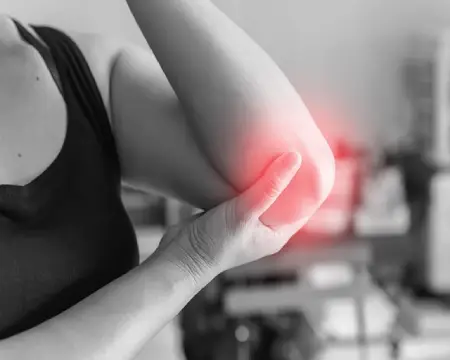
Tennis elbow is a frequent repetitive strain injury treated in rehabilitation clinics. It is clinically known as lateral epicondylalgia. The condition causes pain on the outer side of the elbow. It often limits simple daily movements like gripping, lifting, or typing.
At Pro Fusion Rehab, we treat tennis elbow at its root. Our multidisciplinary clinics in Pickering and Milton combine registered physiotherapy, massage therapy (RMT), and acupuncture to restore your arm function.
At Pro Fusion Rehab, we treat tennis elbow at its root. Our multidisciplinary clinics in Pickering and Milton combine registered physiotherapy, massage therapy (RMT), and acupuncture to restore your arm function.
Typical Symptoms & Common Causes of Tennis Elbow
Tennis elbow develops gradually in most cases. Consequently, symptoms may start as mild discomfort and worsen over time:
- Outer Elbow Pain: Burning or aching pain centered over the lateral epicondyle bone.
- Weak Grip Strength: Noticeable weakness when shaking hands, turning a doorknob, or holding a coffee cup.
- Forearm Tenderness: Tightness and sharp pain along the top extensor muscles of the forearm.
- Pain with Wrist Extension: Increased pain when bending your wrist backward against resistance.
- Morning Stiffness: Persistent stiffness in the elbow joint after waking up.
Despite its name, tennis elbow rarely affects only racket sport players. Instead, it stems from repetitive forearm strain and overload:
- Repetitive Occupational Tasks: Typing, mouse use, carpentry, plumbing, and painting require repeated wrist motions.
- Tendon Microtrauma: Small tears form in the extensor carpi radialis brevis (ECRB) tendon from overuse.
- Poor Lifting Mechanics: Lifting heavy objects with an extended wrist strains the common extensor origin.
- Inadequate Rest: High training volume without recovery breaks down tendon fibers faster than they can heal.
- Kinetic Chain Weakness: Weakness in the shoulder or rotator cuff forces the elbow to work harder.
Looking for Tennis Elbow Relief?
Resting the arm completely is rarely effective for tendon recovery. Instead, structured active care helps rebuild tendon tolerance:
- Modify Daily Activities: First, identify movements that trigger your pain. Then, alter your hand position to reduce direct stress on the tendon.
- Lift with Palms Up: When lifting objects, keep your palms facing upward. This shifts the load to your biceps instead of the injured forearm tendons.
- Take Regular Rest Breaks: Step away from typing or manual tasks every 30 minutes to ease muscle fatigue.
- Avoid Painful Gripping: Do not carry heavy grocery bags with your fingers for prolonged periods.
- Seek Timely Assessment: Tendon injuries respond best to early intervention. Therefore, address your symptoms before they become chronic.
How Can Physiotherapy Treat Tennis Elbow?
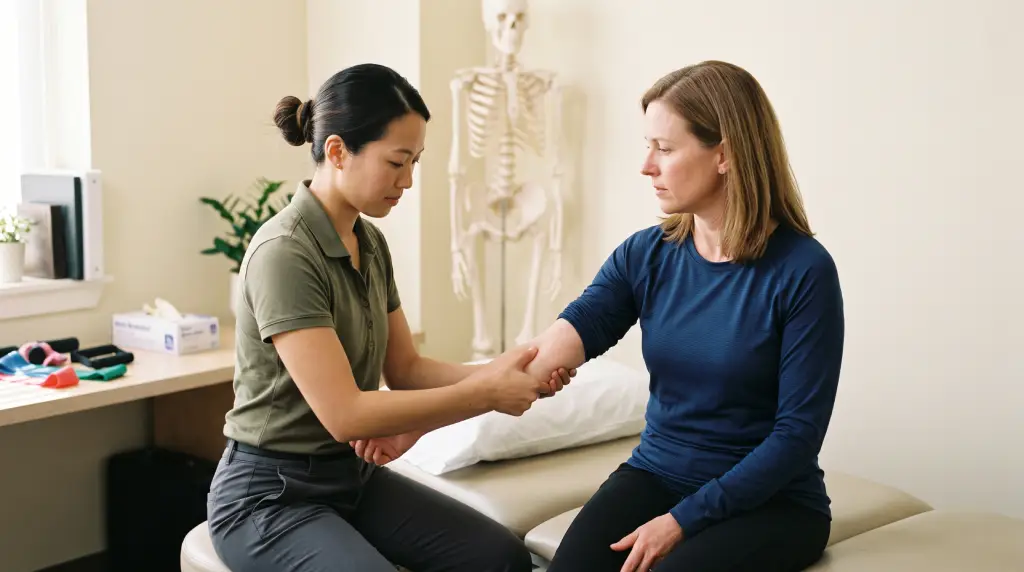
A Registered Physiotherapist evaluates your elbow, wrist, and shoulder mechanics. After that, your therapist creates a step-by-step recovery plan.
Treatment includes:
Treatment includes:
- 1. Progressive Tendon Loading: Tendons require load to heal. Your therapist prescribes specific eccentric and isometric exercises to stimulate collagen repair and build strength.
- 2. Manual Therapy: Targeted joint mobilizations restore normal movement to the elbow and neck. As a result, local pressure on sensitive tissues decreases.
- 3. Soft Tissue Techniques: Cross-friction massage and myofascial release reduce muscle tightness in the forearm extensor mass.
- 4. Radial Shockwave Therapy: Shockwave delivery sends acoustic pulses into the chronic tendon. Consequently, it promotes cellular repair and helps reset chronic pain signals.
Tennis Elbow Relief at Pro Fusion Rehab (Pickering & Milton)
At Pro Fusion Rehab, we combine clinical therapies for faster recovery:
- Registered Physiotherapy: We provide targeted exercise programs, joint mobilizations, and functional rehabilitation.
- Registered Massage Therapy (RMT): Our therapists relieve compensatory trigger points throughout the forearm, shoulder, and upper back.
- Acupuncture: We use neuro-functional acupuncture to ease pain and improve local circulation around the tendon.
- Bracing Guidance: We assess your arm to determine if a counterforce elbow strap will assist your healing.
Frequently Asked Questions (FAQs)
How long does tennis elbow take to heal?
Mild cases often improve within 6 to 8 weeks with targeted physical therapy. However, chronic cases may require 3 to 6 months of progressive tendon loading.
Should I wear a tennis elbow brace all day?
No, a counterforce brace should not be worn constantly. Wear it during aggravating tasks like typing, lifting, or sports. Remove it when resting to avoid restricting blood flow.
Is rest better than exercise for tennis elbow?
Complete rest is not helpful for tendon healing. Tendons need progressive loading to regain tensile strength. Therefore, guided exercise is essential for long-term recovery.
Do I need a doctor’s referral to start therapy?
No, you do not need a referral to see our physiotherapists. You can book an evaluation directly at our clinics.
Home Exercises and Remedies for Tennis Elbow Relief
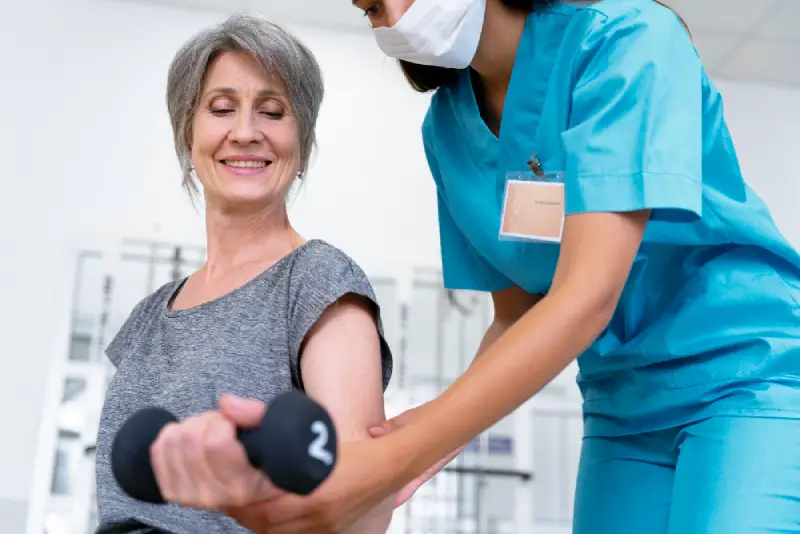
Simple home exercises help maintain movement and reduce pain between appointments. Perform these exercises within a pain-free range:
- Wrist Extensor Stretch: Extend your arm with your elbow straight. Next, gently pull your hand down toward your body until you feel a light stretch. Hold for 20 seconds and repeat 3 times.
- Isometric Wrist Extension: Sit with your forearm supported on a table and your palm facing down. Place your opposite hand on top. Then, push your injured hand up against light resistance without moving the wrist. Hold for 10 seconds.
- Towel Twist Exercise: Hold a rolled towel with both hands in front of you. Next, twist the towel slowly in opposite directions. Perform 10 controlled repetitions to build forearm stamina.
- Forearm Self-Massage: Use your thumb to massage the fleshy forearm muscles just below your elbow. Work across tight areas for 2 minutes to reduce muscle tension.
- Cold Therapy: Apply an ice pack wrapped in a towel for 10 to 15 minutes after activities to numb sharp pain.
Find The Physiotherapy Clinic Near You
Pro Fusion Rehab has 2 well designed and modern rehabilitation clinics, located at Pickering and Milton Ontario.
Pickering Physiotherapy Clinic
Milton Physiotherapy Clinic
Try Our Direct Billing Service
Lower Your Upfront Payment
We direct bill most of the Group Health Benefits, WSIB and Auto Insurance Company