Book Appointment Now

Neck & Shoulder Pain Relief
Relief for Neck & Shoulder Pain: Causes, Evidence-Based Treatment, and Prevention
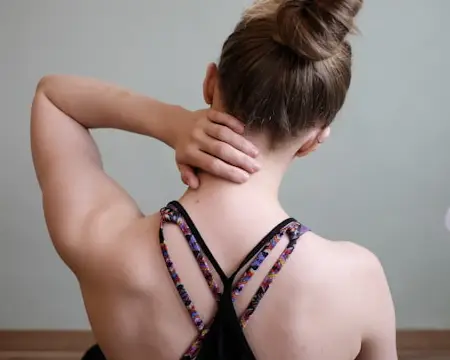
Neck and shoulder pain are among the most frequent musculoskeletal complaints treated in clinical practice. Because the cervical spine and shoulder girdle share interconnected muscular pathways, joint mechanics, and nerve networks, dysfunction in one region rapidly cascades into the other. Left unaddressed, mechanical irritation often evolves into chronic postural strain, tension-type headaches, or radiating arm discomfort.
At Pro Fusion Rehab, our multidisciplinary clinics in Pickering and Milton deliver integrated, evidence-based care—combining registered physiotherapy, registered massage therapy (RMT), acupuncture, and advanced modalities to resolve neck and shoulder dysfunctions at their source.
At Pro Fusion Rehab, our multidisciplinary clinics in Pickering and Milton deliver integrated, evidence-based care—combining registered physiotherapy, registered massage therapy (RMT), acupuncture, and advanced modalities to resolve neck and shoulder dysfunctions at their source.
Typical Symptoms & Common Causes of Neck & Shoulder Pain
Presentations vary depending on whether the primary driver involves myofascial trigger points, cervical facet joints, disc structures, or brachial plexus pathways:
- Axial Neck Stiffness & Hypomobility: Restricted range of motion, particularly during cervical rotation (checking blind spots) and lateral flexion, often paired with deep paraspinal aching.
- Cervicogenic Headaches: Dull, aching head pain that originates at the suboccipital base of the skull and radiates anteriorly over the temples, behind the eyes, or into the forehead.
- Shoulder Girdle Pain & Impingement: Localized pain over the anterior or lateral deltoid and acromioclavicular (AC) region, exacerbated by overhead reaching, lifting, or sleeping on the affected side.
- Cervical Radiculopathy: Sharp, burning, or electric sensations radiating from the cervical spine down the shoulder, arm, forearm, or fingers, frequently tracing specific dermatomal pathways.
- Upper Limb Paresthesia & Neurological Deficits: Numbness, tingling (“pins and needles”), or motor weakness in the hand or grip, indicating cervical nerve root compression or thoracic outlet irritation.
The neck supports the full weight of the head while maintaining substantial multi-planar mobility, making it vulnerable to postural fatigue, degenerative changes, and sudden trauma:
- Postural Strain & “Tech Neck”: Sustained forward-head posture and rounded shoulders (Upper Crossed Syndrome) place exponential mechanical load on the cervical spine, fatiguing the upper trapezius, levator scapulae, and suboccipitals while inhibiting deep cervical flexors.
- Cervical Disc Bulges & Degeneration: Age-related intervertebral disc dehydration or acute annular tears irritating adjacent cervical nerve roots (frequently C5–C7).
- Rotator Cuff Pathology & Tendinopathy: Microtears, tendinosis, or subacromial bursitis within the supraspinatus, infraspinatus, or subscapularis, altering normal scapulohumeral rhythm.
- Whiplash-Associated Disorders (WAD): Rapid acceleration-deceleration forces sustained in motor vehicle accidents (MVA), causing multi-directional sprains and strains to the cervical musculature and anterior/posterior longitudinal ligaments.
- Thoracic Outlet Syndrome (TOS): Neurovascular compression between the anterior/middle scalenes, first rib, and pectoralis minor, producing diffuse shoulder and arm symptoms.
Looking for Neck & Shoulder Pain Relief?
Lasting recovery requires addressing poor mechanical habits and functional movement patterns:
- Modify Workstation Ergonomics: Position your primary monitor directly at eye level to eliminate persistent cervical flexion. Keep elbows supported at 90 degrees and position the keyboard and mouse close to reduce sustained trapezius engagement.
- Prioritize Sleep Ergonomics: Utilize a supportive, contoured cervical pillow that keeps the neck in a neutral alignment. Avoid sleeping prone (on your stomach), which forces prolonged cervical rotation.
- Break Static Postures: Shift your body every 30 to 45 minutes. Simple posture resets—such as shoulder rolls and gentle chin retractions—interrupt tissue creep and restore healthy circulation.
- Seek Timely Clinical Care: Compensatory patterns set in rapidly when neck and shoulder mechanics are compromised. Early clinical intervention prevents acute stiffness from transitioning into persistent myofascial trigger points or secondary shoulder capsulitis.
How Can Physiotherapy Treat Neck & Shoulder Pain?
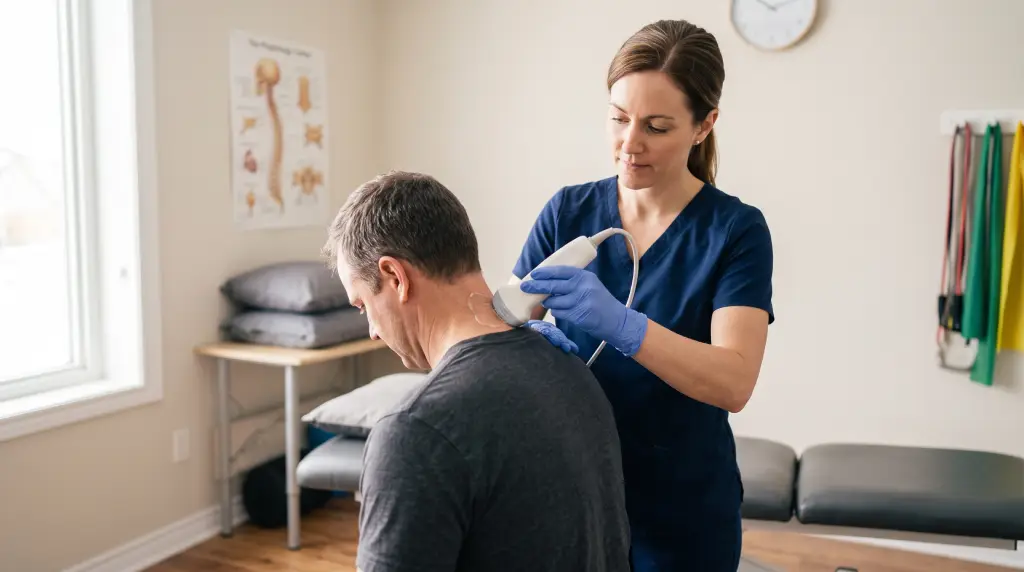
A Registered Physiotherapist begins with a comprehensive physical assessment to isolate the true anatomical driver—evaluating cervical segmental mobility, scapular dyskinesis, rotator cuff strength, and neural dynamics.
Treatment modalities include:
Treatment modalities include:
- 1. Manual Therapy & Cervical/Thoracic Joint Mobilization: Gentle, passive mobilizations of the cervical and thoracic facet joints alongside manual traction to relieve localized joint compression, restore segmental arthrokinematics, and downregulate pain signals.
- 2. Scapular Stabilization & Deep Neck Flexor Retraining: Targeted motor control training for the longus colli, longus capitis, lower trapezius, and serratus anterior. Rebuilding stabilization balance unloads chronically overactive upper trapezius and levator scapulae muscles.
- 3. Rotator Cuff Rehabilitation & Progressive Loading: Individualized strengthening protocols targeting rotator cuff integrity and restoring normal scapulohumeral rhythm, preventing impingement during overhead movement.
- 4. Neural Mobilization & Postural Ergonomics: Gentle nerve flossing techniques for the median, radial, and ulnar nerves to resolve mechanical sensitivity along the brachial plexus pathways, accompanied by personalized workplace postural guidance.
Neck & Shoulder Pain Relief at Pro Fusion Rehab (Pickering & Milton)
At Pro Fusion Rehab, our clinics in Pickering and Milton provide individualized treatment plans that address complex, interconnected spinal and upper extremity complaints:
- Registered Physiotherapy: Detailed movement assessment, manual therapy, joint mobilization, and progressive functional exercise prescription.
- Registered Massage Therapy (RMT): Targeted deep tissue massage, trigger point deactivation, and myofascial release for the neck, shoulders, and upper back.
- Acupuncture & Cupping Therapy: Evidence-informed neuro-functional acupuncture and cupping to stimulate local microcirculation, release stubborn muscular bands, and modulate central pain pathways.
- Shockwave Therapy: Radial shockwave treatment for chronic rotator cuff tendinopathy and persistent myofascial trigger points.
Frequently Asked Questions (FAQs)
How do I know if my pain is coming from my neck or my shoulder?
Because cervical nerves travel directly through the shoulder girdle and down the arm, cervical spine issues frequently masquerade as shoulder pain. If your pain worsens with neck movement, radiates below the elbow, or includes tingling, the cervical spine is often the primary source. If pain is localized primarily over the lateral arm and is aggravated by overhead reaching or lifting, a local shoulder issue (such as rotator cuff tendinopathy) is more likely. A physiotherapist conducts specific diagnostic tests to identify the precise origin.
Can poor posture really cause cervicogenic headaches?
Yes. Sustained forward-head posture significantly increases the compressive load on the upper cervical spine (C1–C3) and creates chronic hypertonicity in the suboccipital musculature. These tight tissues can irritate the greater occipital nerve, referring dull, aching pain up into the back of the head, temples, and behind the eyes.
How long does recovery typically take with physiotherapy and RMT?
Mild-to-moderate postural strains and acute muscular spasms frequently show noticeable relief within 2 to 4 weeks of consistent manual therapy and targeted exercise. More complex conditions, including chronic rotator cuff tendinopathy, cervical radiculopathy, or moderate whiplash injuries, typically require 6 to 12 weeks of structured rehabilitation to achieve full functional restoration and tissue remodeling.
When should I seek immediate medical attention for neck pain?
Seek urgent emergency medical evaluation if your neck pain is accompanied by sudden numbness or weakness affecting both arms or legs, difficulty walking or loss of balance, sudden difficulty with speech or swallowing, visual disturbances, unremitting severe headaches unlike anything previously experienced, or if the pain developed following severe physical trauma.

Home Exercises and Remedies for Neck & Shoulder Relief
Gentle, low-load active movements performed through a pain-free range help decompress spinal structures, improve blood flow, and relieve muscular hypertonicity between clinical visits:
- Cervical Retractions (Chin Tucks): Sit upright with your shoulders relaxed. Gently draw your chin straight back, as if making a subtle “double chin,” keeping your gaze level without tilting your head downward. Hold for 3 to 5 seconds, release, and repeat for 8 to 10 repetitions to activate deep cervical flexors and open the suboccipital space.
- Doorway Pectoral Stretch: Stand in a standard doorway with one forearm resting against the doorframe at shoulder height. Step forward gently with one foot until you feel a comfortable stretch across the chest and front of the shoulder. Hold for 20 to 30 seconds per side to open anterior chest tissues and counter rounded-shoulder posture.
- Scapular Retraction & Squeezes: While seated or standing tall with arms relaxed at your sides, draw your shoulder blades gently back and downward toward your spine. Hold for 5 seconds, relax, and repeat 10 times to reinforce middle and lower trapezius activation.
- Levator Scapulae & Upper Trapezius Stretch: Gently tilt your ear toward your shoulder until a light stretch is felt along the side of the neck. To target the levator scapulae, turn your chin downward toward your armpit. Hold each position comfortably for 20 seconds without aggressive pulling.
- Strategic Thermal Application: Apply an ice pack wrapped in a cloth for 15 minutes to manage acute, sharp flare-ups or post-activity inflammation. For chronic tension, muscle tightness, or morning stiffness, apply a moist heating pad for 15 to 20 minutes to improve tissue extensibility before performing mobility exercises.
Find The Physiotherapy Clinic Near You
Pro Fusion Rehab has 2 well designed and modern rehabilitation clinics, located at Pickering and Milton Ontario.
Pickering Physiotherapy Clinic
Milton Physiotherapy Clinic
Try Our Direct Billing Service
Lower Your Upfront Payment
We direct bill most of the Group Health Benefits, WSIB and Auto Insurance Company