Book Appointment Now

Kinesiology Taping
What is Kinesiology Taping?
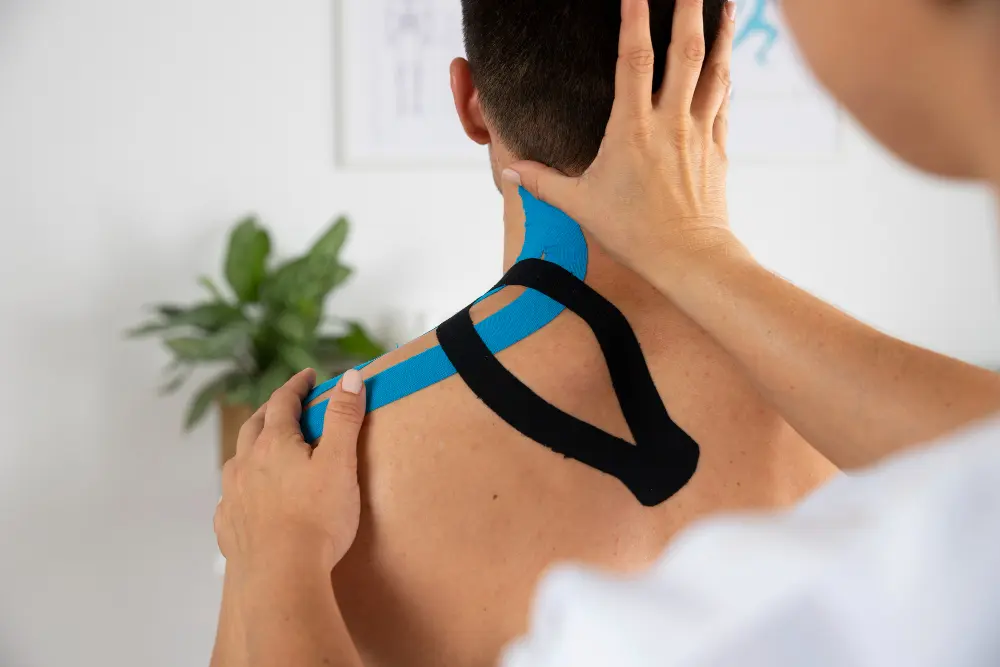
Kinesiology taping uses stretchy, skin-like elastic tape to support muscles and joints without limiting movement. It helps improve circulation, reduce pain, decrease swelling, and enhance body awareness. By gently lifting the skin, it can improve lymphatic flow and support injured or overworked tissues during daily activities or exercise.
Conditions Kinesiology Taping Can Help:
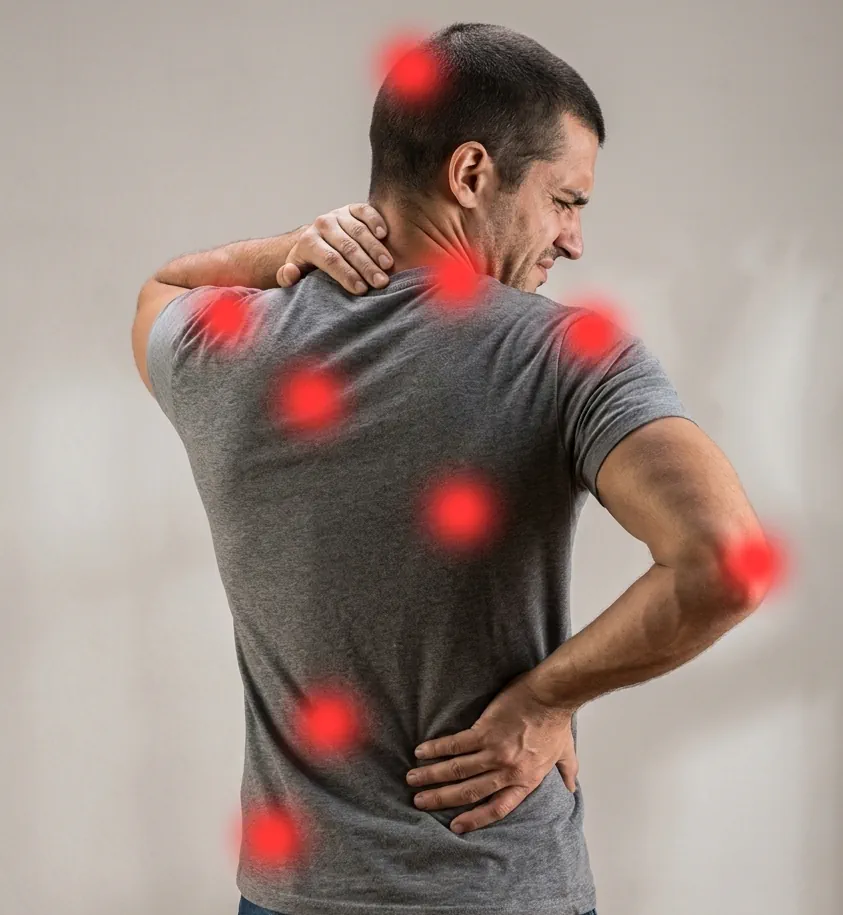
- Neck Pain
- Shoulder Pain
- Low Back Pain
- Knee Pain
- Tennis Elbow
- Plantar Fasciitis
- Muscle Strains
- Ankle Pain
- Joint Instability
- Achilles Tendinitis
- Rotator Cuff Tendinitis
- Patellar Tendinitis
- Bursitis
- Swelling/Edema After Injury
- Carpal Tunnel Syndrome
- Lymphedema
- Bell’s Palsy
- Nerve Entrapments
- Postural Imbalance & Motor Control Issues
If you’re seeking natural pain relief and improved mobility in Pickering or Milton, The Pro Fusion Rehab can help. Our specialized Kinesiology Taping service provides targeted support, reduces discomfort, and enhances your body’s natural healing process—all without medication. Let our experts help you move freely and live fully.
Our Physiotherapy Treatment Options
- Manual stretching
- Manual traction
- Soft tissue therapy
- Mobilisation and manual therapy techniques
- Interferential electro therapy
- Shockwave therapy
- Ultrasound therapy
- Kinesio Taping techniques
- Manual Lymphatic Drainage and Decongestive Therapy
- Therapeutic exercises
- Posture, coordination and balance Re-education.
- Work hardening program.
- Injury prevention education.
What Can Kinesiology Taping Help?
Low Back Pain
Kinesiology taping gently lifts the skin, which may help “turn down” pain signals traveling to the brain. It is also thought to improve blood flow and reduce signals that cause pain. Scientific studies show Kinesiology Taping, especially when combined with physiotherapy, significantly improves lower back pain and movement.
Shoulder Pain
Kinesiology taping can help shoulder pain by improving scapular alignment, reducing muscle tension, and enhancing joint stability. Studies show it can temporarily increase shoulder range of motion and decrease pain by stimulating mechanoreceptors and improving proprioception. Research also suggests taping may reduce activation of overworked muscles, supporting more balanced shoulder movement during activity.
Patellar Tendinitis
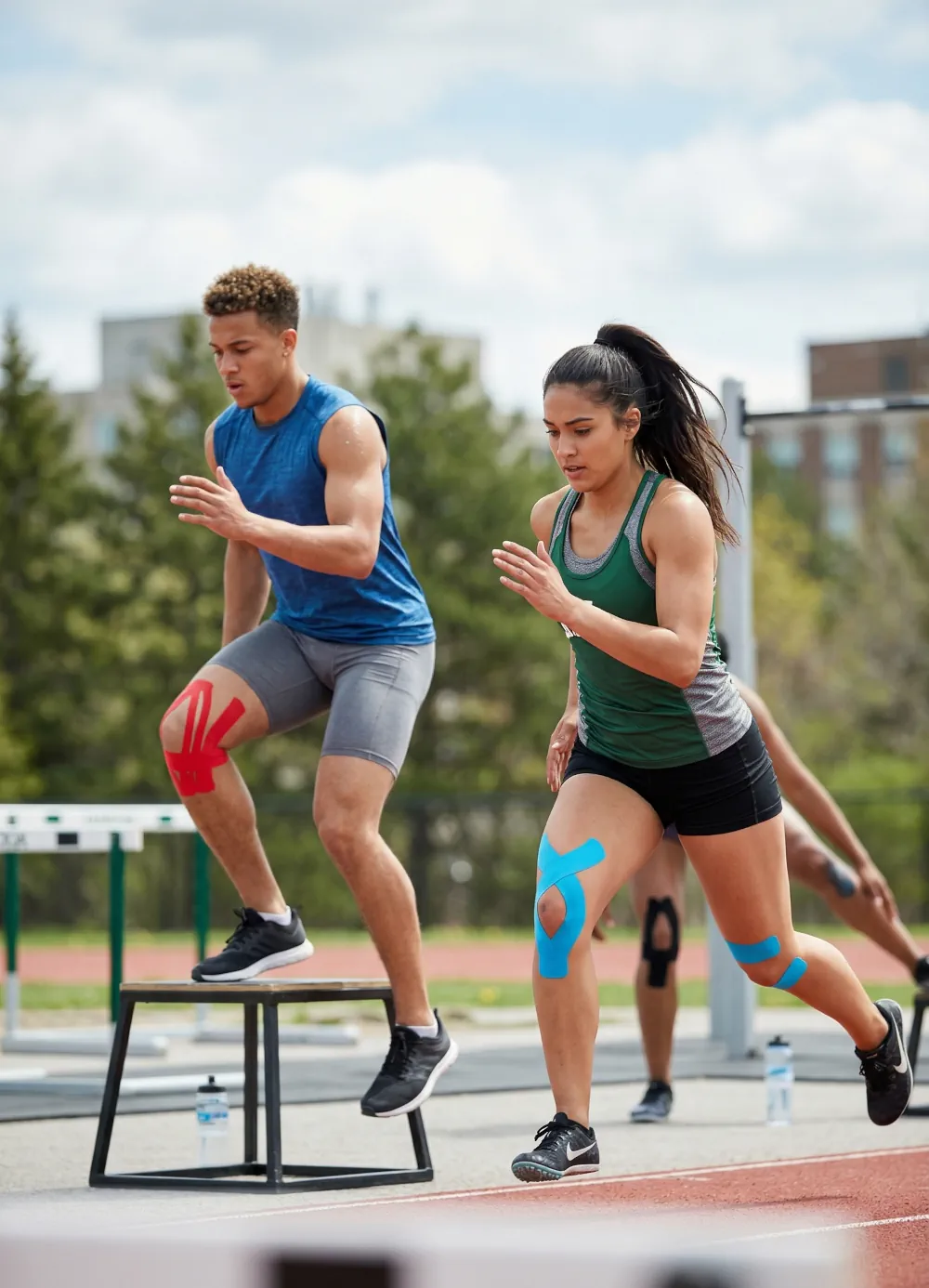
Kinesiology taping can help patellar tendinitis by reducing strain on the patellar tendon and improving patellar tracking. Research shows it can decrease pain during activities like jumping and squatting, likely by enhancing proprioception and redistributing load across the knee. Studies also report short-term improvements in function and reduced tendon stress during movement.
Tennis Elbow
Kinesiology taping can help tennis elbow by reducing tension on the extensor tendon and supporting forearm muscles. Studies show it can provide short-term pain relief and improve grip strength by enhancing proprioception and decreasing excessive muscle activation. Research also suggests taping may relieve discomfort during repetitive wrist and elbow movements.
Carpal Tunnel Syndrome
Kinesiology taping can help carpal tunnel syndrome by gently lifting the skin to reduce pressure on the median nerve and improve local circulation. Studies show it may decrease pain and numbness, enhance wrist mobility, and support better nerve gliding. Research also notes short-term symptom relief when used alongside ergonomic or therapeutic exercises.
Lymphedema
Kinesiology taping can help lymphedema by creating a lifting effect on the skin that promotes lymphatic drainage. This reduces fluid buildup and swelling. Studies show it can improve limb volume, enhance lymph flow, and provide mild, continuous decompression without restricting movement. It is often used as a supportive tool alongside compression and manual lymphatic therapy.
Achilles Tendinitis
Kinesiology taping can help Achilles tendinitis by reducing tension on the tendon and supporting calf muscle function. Studies show it can provide short-term pain relief, improve ankle mobility, and enhance proprioception. Taping may also decrease tendon load during walking or running, promoting better mechanics and reducing irritation during activity.
Helping Patients in Milton and Pickering With Quality Care


Find The Physiotherapy Clinic Near You
Pro Fusion Rehab has 2 well designed and modern rehabilitation clinics, located at Pickering and Milton Ontario.
Pickering Physiotherapy Clinic
Milton Physiotherapy Clinic
Try Our Direct Billing Service
Lower Your Upfront Payment
We direct bill most of the Group Health Benefits, WSIB and Auto Insurance Company