Book Appointment Now

Ankle Sprain and Strain Relief
Ankle Sprain and Strain Relief: Causes, Symptoms, and Evidence-Based Treatment
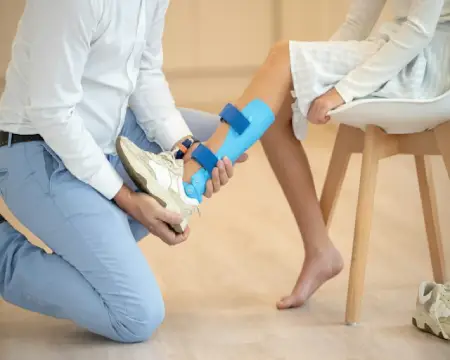
Ankle sprains and strains are frequent lower-body injuries treated in rehabilitation clinics. An ankle sprain involves stretched or torn stabilizing ligaments. In contrast, an ankle strain affects the surrounding muscles or tendons. Both injuries impair balance, cause pain, and limit your ability to walk comfortably.
At Pro Fusion Rehab, our multidisciplinary team treats acute and chronic ankle injuries. Our clinics in Pickering and Milton combine registered physiotherapy, massage therapy (RMT), and acupuncture to rebuild ankle stability.
At Pro Fusion Rehab, our multidisciplinary team treats acute and chronic ankle injuries. Our clinics in Pickering and Milton combine registered physiotherapy, massage therapy (RMT), and acupuncture to rebuild ankle stability.
Typical Symptoms & Common Causes of Ankle Sprains and Strains
Symptoms vary depending on whether the injury affects joint ligaments or muscle-tendon units. Furthermore, the severity of tissue damage influences your recovery:
- Sudden Joint Pain: Sharp, immediate pain following an awkward twist, roll, or direct impact.
- Rapid Swelling and Bruising: Visible fluid buildup and discoloration spreading around the outer or inner ankle.
- Difficulty Bearing Weight: Pain or hesitation when stepping down or pushing off the injured foot.
- Joint Instability: A sensation that the ankle is loose, wobbly, or prone to giving way.
- Localized Tenderness: Sharp tenderness when pressing on the lateral ligaments or surrounding peroneal tendons.
Ankle trauma occurs when the joint moves beyond its normal physical boundaries:
- Inversion Injuries: The foot twists violently inward. This motion stretches or tears the lateral ligaments, especially the anterior talofibular ligament (ATFL).
- Uneven Walking Surfaces: Stepping into a pothole, off a curb, or on uneven trails rolls the joint unexpectedly.
- Sports Participation: Quick cuts, jumping, and landing on another player’s foot overload stabilizing structures in basketball or soccer.
- Sudden Muscular Overload: Rapid acceleration or awkward deceleration strains the peroneal tendons running behind the ankle.
- Previous Unrehabilitated Sprains: Incomplete recovery from a past sprain leaves ligaments lax, creating recurrent joint instability.
Looking for Ankle Sprain and Strain Relief?
Immediate, structured management protects fragile tissues and speeds up recovery:

- Protect the Joint Early: Avoid walking through sharp pain during the first 48 hours. Consider using a supportive brace temporarily.
- Manage Swelling with Elevation: Elevate your ankle above your heart when resting to clear pooling lymphatic fluid.
- Use Light Compression: Wrap the joint with an elastic bandage to minimize swelling without cutting off blood flow.
- Avoid Complete Immobility: Gentle, pain-free ankle circles help maintain blood flow and prevent joint stiffness.
- Schedule an Early Assessment: Proper rehabilitation restores joint proprioception and stops chronic ankle instability from developing.
How Can Physiotherapy Treat Ankle Sprains and Strains?
A Registered Physiotherapist assesses ligament laxity, joint mobility, and neuromuscular control. Next, your therapist develops a progressive recovery plan.
Key treatment approaches include:
Key treatment approaches include:
- 1. Manual Therapy and Joint Mobilization: Hands-on mobilizations restore normal talocrural and subtalar joint movement. Consequently, stiffness decreases, and normal walking patterns return faster.
- 2. Proprioceptive and Balance Retraining: Ligament tears damage joint position receptors. Targeted balance exercises on wobble boards retrain your nervous system to prevent repeat twists.
- 3. Progressive Tendon Loading: Therapeutic resistance exercises strengthen the peroneal and calf muscles. As a result, the muscular system compensates effectively for stretched ligaments.
- 4. Custom Taping and Bracing: Therapists apply specialized taping to stabilize the ankle during early recovery. Later, functional braces protect the joint during sports.
Ankle Sprain Relief at Pro Fusion Rehab (Pickering & Milton)
At Pro Fusion Rehab, our multidisciplinary team coordinates care to deliver efficient recovery:
- Registered Physiotherapy: We provide ligament assessments, joint mobilizations, balance retraining, and sport-specific return-to-play programs.
- Registered Massage Therapy (RMT): Our therapists relieve compensatory tightness in the calf, shin, and foot musculature.
- Acupuncture: We utilize neuro-functional acupuncture to downregulate localized pain and improve lymphatic drainage.
- Supportive Bracing and Orthotics: We fit medical ankle braces and custom foot orthotics to correct faulty gait mechanics.
Frequently Asked Questions (FAQs)
What is the difference between an ankle sprain and an ankle strain?
An ankle sprain affects ligaments, which connect bone to bone. Conversely, an ankle strain affects muscles or tendons, which connect muscle to bone.
How long does an ankle sprain take to heal?
Mild sprains often heal within 2 to 4 weeks with early care. However, severe ligament tears require 8 to 12 weeks of structured rehabilitation to restore stability.
Should I walk on a sprained ankle?
You should only bear weight if it does not cause sharp pain or limping. If you cannot take four steps without severe discomfort, consult a clinician first.
Why does my ankle feel weak months after a sprain?
Sprains damage sensory nerve endings that control balance. Without specific proprioceptive exercises, the ankle remains unstable and vulnerable to reinjury.

Home Exercises and Remedies for Ankle Sprain and Strain Relief
Performing gentle home exercises restores range of motion and neuromuscular control between clinic appointments:
- Ankle Alphabet: Sit with your leg elevated. Slowly trace the letters of the alphabet in the air with your big toe. Repeat twice daily to maintain mobility.
- Towel Calf Stretch: Sit with your leg straight out. Loop a towel around the ball of your foot. Gently pull the towel toward you for 20 seconds to stretch the calf.
- Single-Leg Balance: Stand near a wall or counter for safety. Lift your uninjured foot and balance on your injured ankle for 20 to 30 seconds. Repeat 3 times.
- Theraband Ankle Eversion: Loop a resistance band around your forefoot. Slowly turn your foot outward against light resistance. Complete 10 repetitions to strengthen the peroneal tendons.
- Cold Therapy: Apply an ice pack wrapped in a cloth for 10 to 15 minutes after exercise to manage lingering soreness.
Find The Physiotherapy Clinic Near You
Pro Fusion Rehab has 2 well designed and modern rehabilitation clinics, located at Pickering and Milton Ontario.
Pickering Physiotherapy Clinic
Milton Physiotherapy Clinic
Try Our Direct Billing Service
Lower Your Upfront Payment
We direct bill most of the Group Health Benefits, WSIB and Auto Insurance Company