Book Appointment Now

Hip Pain Relief
Hip Pain Relief: Causes, Symptoms, and Evidence-Based Treatment
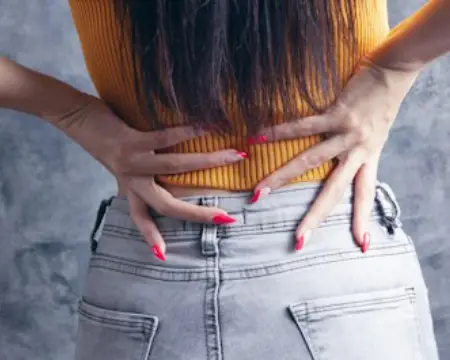
Hip pain is a common complaint that affects people of all activity levels. The hip is a sturdy ball-and-socket joint designed to bear body weight. However, walking, climbing stairs, and prolonged sitting place continuous demands on this joint. When surrounding tissues or joint surfaces become irritated, hip pain can quickly restrict daily mobility and disrupt sleep.
At Pro Fusion Rehab, our multidisciplinary team in Pickering and Milton pinpoints the mechanical cause of your discomfort. We integrate registered physiotherapy, registered massage therapy (RMT), and acupuncture to help restore smooth, comfortable movement.
At Pro Fusion Rehab, our multidisciplinary team in Pickering and Milton pinpoints the mechanical cause of your discomfort. We integrate registered physiotherapy, registered massage therapy (RMT), and acupuncture to help restore smooth, comfortable movement.
Typical Symptoms & Common Causes of Hip Pain
Hip pain does not always stay confined to the hip joint itself. In fact, symptoms often refer into the groin, outer thigh, or lower back:
- Deep Groin Aching: A dull, persistent ache in the anterior hip or groin crease, common with joint-surface irritation.
- Lateral Hip Tenderness: Sharp pain over the outside of the hip, making it difficult to sleep on that side.
- Morning Joint Stiffness: Noticeable tightness when waking up or standing up after driving and desk work.
- Catching or Clicking: Occasional clicking, pinching, or catching sensations during deep squats or leg rotations.
- Gait Hesitation or Limping: An altered walking pattern caused by pain when transferring weight onto the affected leg.
Hip discomfort rarely emerges without a biomechanical trigger. Often, it stems from repetitive overload, cartilage wear, or muscular imbalances:
- Hip Osteoarthritis: Gradual thinning of articular cartilage leads to joint friction, stiffness, and reduced range of motion.
- Greater Trochanteric Pain Syndrome (Bursitis/Gluteal Tendinopathy): Irritation of the fluid-filled bursa or gluteal tendons resting along the outer hip bone.
- Femoroacetabular Impingement (FAI): Bone spurs on the femoral head or acetabulum create premature contact, pinching surrounding labral tissue during deep flexion.
- Hip Flexor and Groin Strains: Acute overstretching or repetitive strain of the iliopsoas or adductor muscle groups during sports or heavy lifting.
- Referred Lumbar Spine Issues: Herniated discs or facet joint irritation in the lower spine frequently refer pain directly into the hip and buttock.
Looking for Hip Pain Relief?
Resting completely can cause stabilizing hip muscles to weaken quickly. Instead, adopting smart daily adjustments relieves joint pressure while keeping tissues healthy:
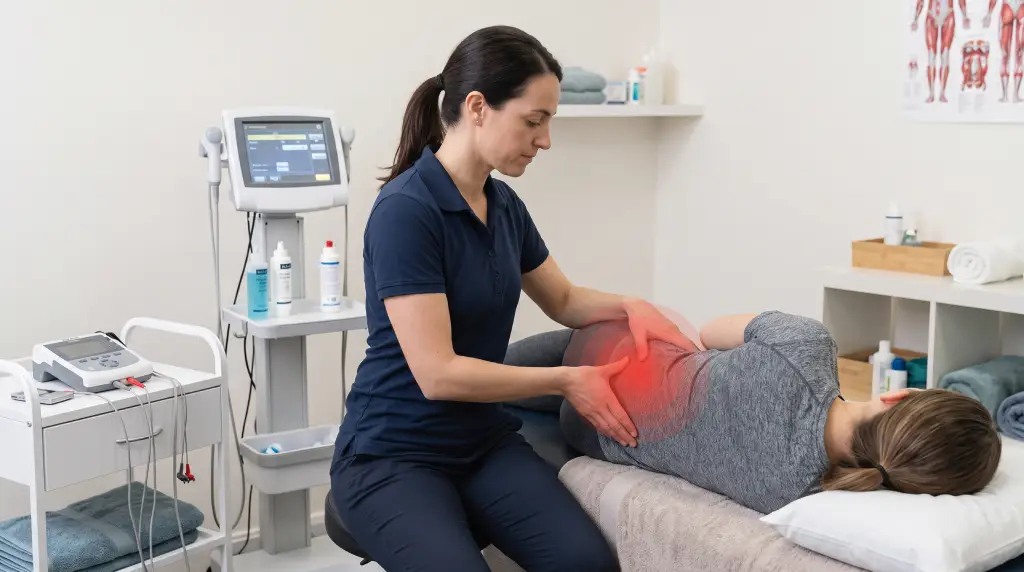
- Modify Your Sleep Setup: Place a supportive pillow between your knees when sleeping on your side. This keeps your pelvis neutral and unloads outer hip tendons.
- Avoid Crossing Your Legs: Crossing your legs places continuous traction on the lateral hip tissues. Keep your feet flat on the floor while seated.
- Pace Your Daily Steps: Break long walking tasks into shorter intervals on level surfaces to avoid irritating sensitive hip tendons.
- Use Heat for Lingering Tightness: Apply a warm heating pad to tight gluteal and groin muscles for 15 minutes before daily movement.
- Schedule an Early Assessment: Unchecked hip stiffness often forces your lower back and knees to overcompensate. Therefore, seek early clinical care.
How Can Physiotherapy Treat Hip Pain?
A Registered Physiotherapist evaluates your hip kinematics, pelvic control, and lower back mechanics. After that, your therapist creates an individualized recovery protocol.
Key physiotherapy interventions include:
Key physiotherapy interventions include:
- 1. Targeted Gluteal and Core Strengthening: Strengthening the gluteus medius, gluteus maximus, and deep core stabilizes the pelvis. As a result, excessive shear forces on the hip joint decrease during walking.
- 2. Manual Therapy and Joint Mobilization: Hands-on mobilizations restore normal joint capsular glide. Consequently, morning stiffness drops and functional hip rotation improves.
- 3. Soft Tissue Release and Dry Needling: Targeted manual techniques release hypertonic hip flexors, piriformis bands, and the tensor fasciae latae (TFL) to balance muscle pull around the joint.
- 4. Gait and Movement Pattern Retraining: Correcting movement flaws during sit-to-stand transfers, squatting, and walking eliminates compensatory stress across the hip socket.
Hip Pain Treatment at Pro Fusion Rehab (Pickering & Milton)
At Pro Fusion Rehab, our multidisciplinary team coordinates care to deliver efficient recovery:
- Registered Physiotherapy: We provide biomechanical evaluations, manual joint therapy, pelvic alignment training, and functional rehab.
- Registered Massage Therapy (RMT): Our therapists relieve deep muscle tightness across the glutes, hips, quadriceps, and lower back.
- Acupuncture: We use neuro-functional acupuncture to downregulate local pain receptors and stimulate regional tissue blood flow.
- Custom Orthotics: We evaluate your foot strike to correct gait imbalances that transfer abnormal rotational stress to the hip joint.
Frequently Asked Questions (FAQs)
How do I know if my pain is coming from my hip or my lower back?
Pain originating directly from the hip joint typically presents in the groin crease or deep anterior hip, especially when putting on socks or getting out of a low car. In contrast, discomfort originating from the lower spine often concentrates in the buttock and shoots down the back of the thigh. A physical assessment distinguishes the true origin.
Is walking beneficial if I have hip pain?
Yes, walking helps circulate synovial fluid to nourish joint cartilage. However, avoid steep inclines, uneven ground, and walking through sharp joint pain. If limping begins, pause your walk to rest.
Can hip bursitis heal with physiotherapy?
Yes. Most cases of greater trochanteric pain syndrome resolve with conservative physiotherapy. Treatment focuses on strengthening the gluteal tendons, releasing tight lateral fascia, and modifying aggravating daily movements.
When should I get immediate medical care for hip pain?
Seek prompt emergency medical care if you cannot put any weight on your leg after a fall, if the joint looks visibly deformed, or if severe pain is accompanied by a sudden fever and chills.

Home Exercises and Remedies for Hip Pain Relief
Gentle home exercises help lubricate the joint and strengthen supporting muscles between clinical sessions. Always move within a comfortable, pain-free range:
- Side-Lying Clamshells: Lie on your uninjured side with knees bent at 90 degrees and feet together. Slowly raise your top knee while keeping your heels touching. Hold for 2 seconds, then lower under control. Complete 10 to 12 repetitions to activate the gluteus medius.
- Glute Bridge: Lie flat on your back with knees bent and feet resting hip-width apart. Squeeze your buttocks and lift your hips until your thighs align with your torso. Hold for 3 seconds, then lower slowly. Perform 10 repetitions to build posterior support.
- Seated Figure-Four Stretch: Sit upright in a sturdy chair. Rest the ankle of your affected leg across the opposite knee. Lean your chest forward gently until you feel a comfortable stretch in your buttock. Hold for 20 to 30 seconds.
- Standing Hip Abduction: Stand tall while holding onto a sturdy kitchen counter for balance. Slowly lift your affected leg out to the side without leaning your torso. Hold for 2 seconds, then return. Complete 10 controlled repetitions.
- Cold and Warm Compresses: Apply an ice pack wrapped in a cloth to the outer hip for 15 minutes after activity to soothe sharp inflammation. Use moist heat across the front of the hip to loosen tight hip flexors before walking.
Find The Physiotherapy Clinic Near You
Pro Fusion Rehab has 2 well designed and modern rehabilitation clinics, located at Pickering and Milton Ontario.
Pickering Physiotherapy Clinic
Milton Physiotherapy Clinic
Try Our Direct Billing Service
Lower Your Upfront Payment
We direct bill most of the Group Health Benefits, WSIB and Auto Insurance Company