Book Appointment Now

Arthritis Relief
Arthritis Relief: Causes, Symptoms, and Evidence-Based Treatment
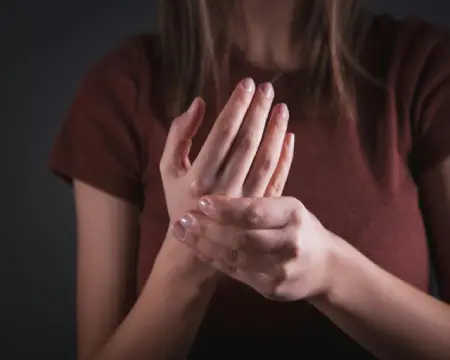
In short: arthritis means joint surfaces that are worn (osteoarthritis) or inflamed by an immune process (rheumatoid and related types), and both respond to strength work, load management and, where needed, medication. A typical physiotherapy course is six to ten visits over eight to twelve weeks, and the first change is usually easier stairs, a shorter morning stiff period and less pain at the end of the day rather than less pain at rest. The condition involves chronic inflammation or wear within one or more joints. While many people assume joint pain is an unavoidable part of aging, targeted movement and therapy can significantly slow its progression. With proper clinical management, you can keep joints flexible and maintain an active lifestyle.
At Pro Fusion Rehab, our experienced team in Pickering and Milton focuses on preserving your joint health. We combine registered physiotherapy, registered massage therapy (RMT), and acupuncture to improve your comfort and daily mobility.
At Pro Fusion Rehab, our experienced team in Pickering and Milton focuses on preserving your joint health. We combine registered physiotherapy, registered massage therapy (RMT), and acupuncture to improve your comfort and daily mobility.
Typical Symptoms & Common Causes of Arthritis
Arthritis symptoms often develop gradually over months or years. Furthermore, symptoms can fluctuate depending on weather, activity levels, and rest:
- Persistent Joint Aching: A deep, dull ache centered within weight-bearing or frequently used joints.
- Morning Stiffness: Joint stiffness lasting from 30 minutes to over an hour after waking up.
- Joint Swelling and Warmth: Visible swelling or a feeling of heat around the affected joint capsule.
- Reduced Mobility: Progressive difficulty bending, straightening, or putting weight on the joint.
- Grinding Sensations: A clicking, cracking, or grinding feeling (crepitus) during routine daily movements.
Arthritis is an umbrella term covering over one hundred different conditions. The two most common forms involve distinct anatomical processes:
- Osteoarthritis (OA): Often called mechanical wear-and-tear arthritis. The protective cartilage cushioning the ends of your bones gradually thins, causing increased joint friction and bone spurs.
- Rheumatoid Arthritis (RA): An autoimmune disorder where your immune system mistakenly attacks the synovium lining your joint capsules.
- Previous Joint Injuries: Past fractures, ligament tears, or meniscal damage often accelerate cartilage breakdown later in life.
- Repetitive Occupational Strain: Decades of repetitive kneeling, heavy lifting, or typing place excess mechanical stress on specific joints.
- Muscle Weakness: Weak stabilizing muscles force your joint surfaces to absorb higher impact loads during everyday activities.
Looking for Arthritis Relief?
Protecting arthritic joints does not mean stopping physical activity. In fact, resting too much causes stabilizing muscles to weaken and joints to stiffen further:
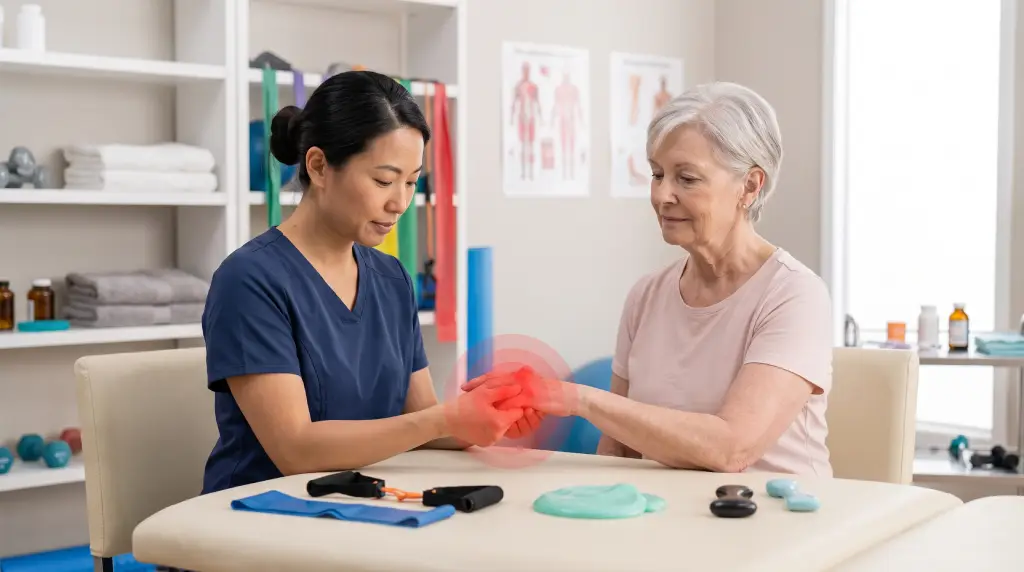
- Stay Gently Active: Low-impact exercises keep cartilage nourished through regular synovial fluid circulation.
- Protect Vulnerable Joints: Use larger joints to carry objects. For instance, hold grocery bags using your forearms rather than your fingers.
- Apply Warmth for Morning Stiffness: A warm morning shower or heating pad relaxes tight muscles around arthritic joints.
- Maintain a Consistent Routine: Break larger tasks into smaller, manageable steps throughout the day to avoid evening flare-ups.
- Get an Early Physical Assessment: Targeted exercises can stabilize a joint before cartilage loss becomes severe.
How Can Physiotherapy Treat Arthritis?
A Registered Physiotherapist conducts a complete functional assessment of your affected joints. Next, your therapist develops an individualized exercise plan to unload worn articular surfaces.
Key physiotherapy interventions include:
Key physiotherapy interventions include:
- 1. Targeted Muscle Strengthening: Building strength in muscles surrounding the joint—such as the quadriceps for knees or glutes for hips—acts like a natural shock absorber. Consequently, joint compression drops.
- 2. Manual Therapy and Joint Mobilization: Gentle, hands-on mobilizations reduce capsular tightness. As a result, joint mechanics improve and daily stiffness eases.
- 3. Range-of-Motion Exercises: Therapeutic movements prevent the progressive loss of motion that often accompanies joint degeneration.
- 4. Custom Bracing and Orthotic Support: Unloader braces and custom foot orthotics help realign joint forces. This reduces direct pressure on the most worn areas of cartilage.
Home Exercises and Remedies for Arthritis Relief
Consistent, low-impact home exercises help lubricate stiff joints and ease daily discomfort. Always work within a comfortable, pain-free range:
- Seated Knee Extensions: Sit tall in a supportive chair with feet flat on the floor. Slowly extend one leg straight out in front of you. Hold for 3 seconds, then lower under control. Complete 10 repetitions per leg to build knee strength without loading the joint.
- Gentle Finger and Hand Clenches: Open both hands wide, spreading your fingers apart comfortably. Slowly close your hands into a soft fist, then open them again. Repeat 10 times to ease finger stiffness and maintain hand grip.
- Standing Calf Raises: Stand facing a sturdy counter or wall for support. Slowly rise up onto the balls of your feet, hold for 2 seconds, and lower back down gently. Repeat 10 times to support ankle and foot mobility.
- Shoulder Pendulum Swings: Lean forward slightly while resting your uninjured hand on a table. Let your painful arm hang down freely. Gently swing the arm in small circles using the momentum of your torso. Complete 10 circles clockwise and counterclockwise.
- Thermal Contrast Therapy: Apply a moist heating pad for 15 minutes before activity to relax tight surrounding muscles. If a joint becomes swollen after movement, apply an ice pack wrapped in a cloth for 10 minutes to calm irritation.
Arthritis Relief at Pro Fusion Rehab (Pickering & Milton)
At Pro Fusion Rehab, our multidisciplinary team coordinates care to deliver efficient recovery:
- Registered Physiotherapy: We design joint-friendly exercise programs, provide manual therapy, and guide safe activity modifications.
- Registered Massage Therapy (RMT): Our therapists relieve compensatory muscle spasms that develop around stiff, painful joints.
- Acupuncture: We use neuro-functional acupuncture to downregulate chronic pain pathways and stimulate local circulation.
- Custom Orthotics and Bracing: We fit custom foot orthotics and joint braces to correct alignment and reduce mechanical joint stress.
What Does A Staged Treatment Plan Look Like?
Treatment runs in three phases. The pace is set by how long the symptoms have been present, how much load the area takes every day, and how well the first phase settles. Visits are counted from your assessment rather than sold as a package.
| Phase | Goal | What Treatment Involves | Typical Visits |
|---|---|---|---|
| Phase 1 – Reduce Flare (Weeks 0-3) | Lower pain and keep the joint moving through its range | Activity pacing, range of motion, isometric strength work, heat or cold, walking aid advice | 1-2 visits per week |
| Phase 2 – Build Strength (Weeks 3-10) | Make the muscles around the joint carry load again | Progressive resistance training, hydrotherapy-style pool work where available, balance and gait | Weekly, then every two to three weeks |
| Phase 3 – Maintain (Ongoing) | Keep function and catch flares early | Home programme review, flare plan, footwear and orthotic review, quarterly check-in | Every 8-12 weeks |
When Should You See A Doctor Before Physiotherapy?
Three patterns change the order of care. None of them means the joint cannot be rehabilitated – they mean a medical question gets answered first.
- One joint becomes hot, red, swollen and very painful over hours, especially with a fever: that is how an infected joint presents, and it is an emergency. Go to the emergency department the same day.
- Several joints are swollen and stiff together, morning stiffness lasts more than 30 minutes, or you feel generally unwell: that pattern points to inflammatory arthritis, which needs a rheumatologist and usually medication before exercise progresses. Ask your family doctor for a referral.
- You have new night pain that wakes you, unexplained weight loss, or pain that is worse at rest than in use: those need medical workup rather than a loading programme. Your family doctor is the first stop.
Once those questions are answered, physiotherapy builds the strength and pacing that keep the joint usable. Exercise does not wear arthritis out; inactivity does.
Arthritis Care In Pickering
Arthritic joints are treated at the Pickering clinic with manual therapy, exercise, TENS and ultrasound, keeping the joint in use rather than resting it. The clinic is at 1885 Glenanna Road, Unit 112, open Monday to Thursday 9 AM to 7 or 8 PM, Friday 10 AM to 7 PM and Saturday 9 AM to 5 PM. Three registered massage therapists and two physiotherapists work here, and osteopathic manual therapy is offered at this location only. Free parking is in the medical building and on the street, with Durham Region Transit and GO Bus at Pickering City Centre. Direct billing is available to most major insurers. Call (905) 492-2577.
Arthritis Care In Milton
Arthritic pain at the Milton clinic is managed with manual therapy, exercise and modalities such as TENS and ultrasound, with the aim of keeping the joint in use rather than resting it. The clinic runs Monday to Friday, 10 AM to 7 PM, and is closed on weekends; it is at 470 Bronte Street South, Unit 200, with free parking in the medical building. Milton Transit Route 2 from the GO Station and Route 8 serve the Bronte and Derry intersection. Acupuncture and massage therapy are available on site if the plan includes them. Direct billing is available to most major insurers. Call (289) 878-8881.
Frequently Asked Questions (FAQs)
Will Exercise Wear Down My Arthritic Joints Further?
No. Joint cartilage relies on gentle movement to absorb essential nutrients from synovial fluid. Guided, low-impact exercise actually strengthens supporting muscles and protects joint cartilage from premature wear.
What Is the Difference Between Osteoarthritis and Rheumatoid Arthritis?
Osteoarthritis is primarily caused by mechanical wear of joint cartilage over time. In contrast, rheumatoid arthritis is an autoimmune condition where the immune system attacks the joint lining, often affecting joints symmetrically on both sides of the body.
Can Acupuncture Help with Arthritis Pain?
Yes. Acupuncture stimulates natural pain-relieving endorphins and helps reduce local inflammation around arthritic joints. Many patients experience improved mobility and decreased reliance on pain medications.
When Should I Consider Custom Orthotics for Arthritis?
If you have osteoarthritis in your feet, ankles, knees, or hips, custom orthotics can help significantly. They correct foot pronation or supination, distributing body weight evenly and reducing abnormal joint loading during walking.
Will Exercise Wear My Joints Out Faster?
No. Loading a joint with arthritis strengthens the muscle around it and improves cartilage nutrition; the damage comes from inactivity and from sudden unaccustomed load. The dose is what matters, and that is what we set and adjust.
Is Walking Good Or Bad For Arthritis?
Good, in the amount you recover from within a day. A 20 to 30 minute walk that leaves you no worse the next morning is the right dose; a walk that causes a two-day flare was too much. We build the dose up rather than guess it.
Can Physiotherapy Help If I Am Waiting For A Joint Replacement?
Yes, and it shortens the recovery afterwards. Pre-surgical strength and walking practice reduce the time to walking unaided, and they are the main thing you can control while you wait. We can also prepare the home exercises you will use after surgery.
Do Supplements Or Injections Replace Rehabilitation?
No. Supplements have weak evidence and injections reduce pain for weeks without changing strength or function. They can open a window to exercise comfortably, which is why they are sometimes used alongside a programme rather than instead of one.
Do You Direct Bill For Arthritis Treatment?
Yes, we bill most major insurers directly for physiotherapy, massage therapy and acupuncture, so you usually pay only the co-payment at the visit. Custom orthotics and compression stockings are covered by some plans and usually need a prescription – ask before ordering.
Find The Physiotherapy Clinic Near You
Pro Fusion Rehab has 2 well designed and modern rehabilitation clinics, located at Pickering and Milton Ontario.
Pickering Physiotherapy Clinic
Milton Physiotherapy Clinic
Try Our Direct Billing Service
Lower Your Upfront Payment
We direct bill most of the Group Health Benefits, WSIB and Auto Insurance Company